
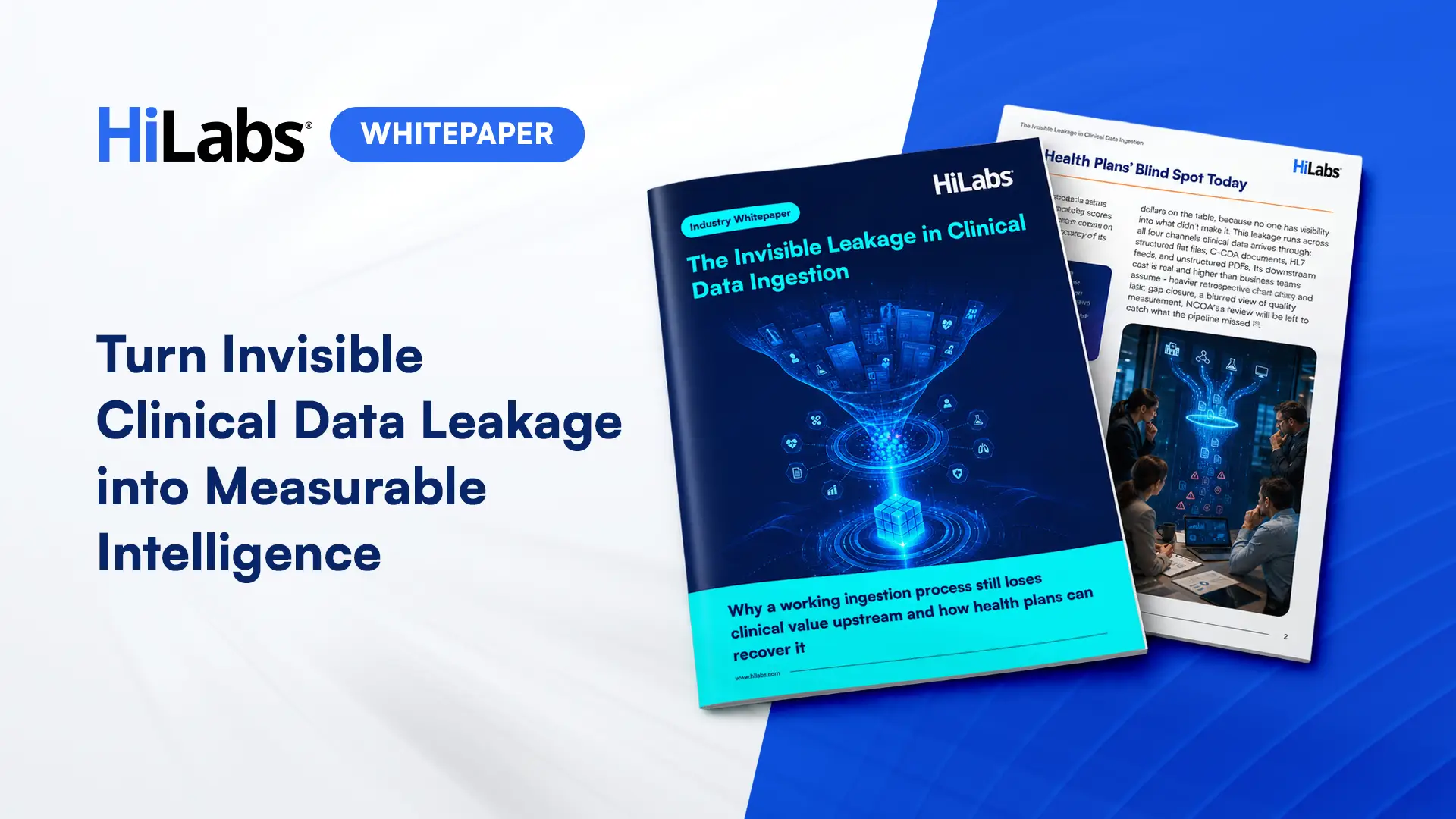
The Invisible Leakage in Clinical Data Ingestion
Released on:
Sep 28th, 2026
Released on:
Sep 28th, 2026
Clinical data ingestion is often considered an IT process—but its failures can create material business leakage.
Health plans receive vast amounts of clinical data across flat files, C-CDA, HL7, and PDFs, yet meaningful information can be lost at every step. Files can fail, feeds can remain inactive, formats can drift, and valuable clinical content can remain trapped in unstructured documents.
The result is a blind spot - plans often know what they processed, but not what they received and lost. That leakage can drive more retrospective chart chasing, delayed care-gap closure, and less complete quality and risk scores. It can also increase provider abrasion and make reported outcomes harder to substantiate during audits and validation.
The opportunity is to move from data ingestion to clinical data completeness—measuring and managing what enters the enterprise.
A unified intake layer can reconcile structured and unstructured clinical data into a common, usable record. AI can extract clinical evidence from narrative and scanned documents that traditional pipelines leave unread.
Adaptive mapping can onboard changing and new data sources without repeated engineering effort. Built-in quality, audit, and remediation capabilities can make previously invisible leakage measurable and actionable.
For C-suite leaders, this is ultimately about protecting margin, strengthening compliance, improving quality, and creating better data for AI.
The strategic shift is simple - stop asking whether the pipeline works, and start asking how much clinical value the pipeline is losing.
Download the whitepaper today to learn more about the invisible leakage in clinical data ingestion.